Run open AI models on dedicated GPU infrastructure in a European data center.
Non-binding · reply within 1–2 business days
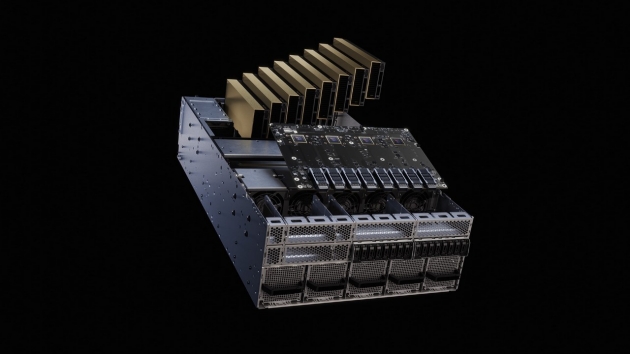
Dedicated GPU servers, operated by GEKI.
There is no single right server for AI inference.
Which infrastructure makes sense depends on what you want to do with it:
Which application will run on it?
Internal assistant, document processing, coding agent, customer service or an AI feature in your product.
How many users access it at the same time?
An internal team has different requirements than a SaaS application with hundreds of parallel requests.
How fast do responses need to be?
Interactive applications need different throughput than background batch processing.
How much context is processed?
Long documents and large context windows require additional GPU memory.
Which data is processed?
For sensitive data, location, tenant isolation and dedicated infrastructure can be decisive.
How high is the expected usage?
The higher the sustained load, the more attractive your own dedicated GPU capacity becomes versus token-based APIs.
GEKI takes these requirements and sizes the infrastructure from them.
Only then do we decide which GPUs make sense.
Not every workload needs an H100. And the same GPU is not the most economical choice for every model.
NVIDIA RTX PRO 6000 Blackwell
96 GB VRAM per GPU
A strong platform for many current open-weight models and production inference. Typical GEKI systems use several RTX PRO 6000.
See RTX PRO 6000 AI Factory →AMD Instinct MI350P
144 GB HBM3e per GPU
For workloads with larger memory needs and high inference load. Multi-GPU systems enable several hundred gigabytes up to more than a terabyte of GPU memory.
See AMD MI350P AI Factory →Larger GPU systems
Custom
When model or load go beyond these systems, we plan larger multi-GPU configurations individually — matched to your concrete workload.
Configure infrastructure →The biggest model is not automatically the best model.
For many enterprise applications a smaller model is:
That is why GEKI helps select the model based on the application.
Small and mid-size models
For clearly defined tasks like classification, extraction, RAG or simple agents, a compact model can be entirely sufficient. The advantage: high throughput on comparatively little hardware.
Large open-weight models
For complex reasoning, coding or demanding agents, larger models can make sense. That mainly raises GPU memory and hardware needs.
Very large frontier models
Even very large open-weight models can run on dedicated GEKI infrastructure. Here we first check whether the extra model size is actually necessary for the application – or whether a smaller model is the more economical solution.
A good example of why model and hardware have to be considered together.
DeepSeek V4 Flash runs on comparatively compact infrastructure:
The complete infrastructure including hosting and the GEKI stack — pricing on request.
At high utilization this can achieve a very low effective price per processed token.
But you do not buy tokens from GEKI.
You get the infrastructure.
Once hardware and model are set, GEKI takes over production operations.
Infrastructure
Provisioning the dedicated GPU servers in a European data center.
Inference stack
Installation and optimization of the inference engine and models.
API
Provided via an OpenAI-compatible API.
Monitoring
Monitoring of hardware, inference and utilization.
Updates
Drivers, runtime and model versions are updated in a controlled way.
Support
One point of contact for hardware and AI infrastructure.
A public API is often the simplest solution for tests and low usage.
Your own dedicated infrastructure becomes interesting when you:
If dedicated infrastructure does not yet pay off for your workload, we will tell you that too.
You do not need to know which GPU or which model you need. Tell us what the AI should do, how many users or requests you expect, and the requirements for speed and data handling — GEKI derives model, hardware and infrastructure from that.